
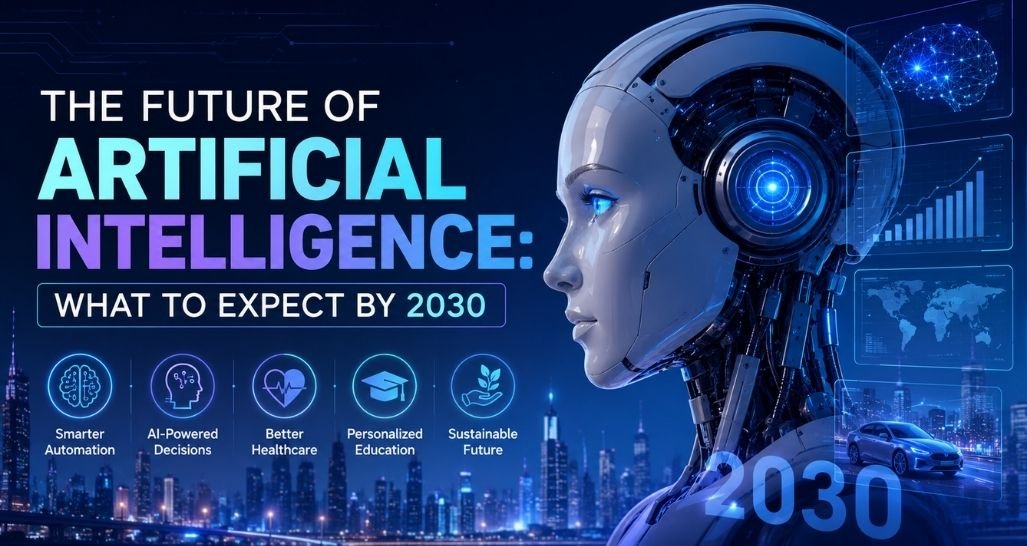
Artificial Intelligence (AI) has evolved from a far-off idea in science fiction to a powerful force that is actively transforming industries, economies, and our daily lives. As we gaze into the future, the landscape of AI by 2030 is set to bring even more groundbreaking changes. With advancements in intelligent automation and human-like reasoning, the future of artificial intelligence is poised to completely change the way we live, work, and engage with technology.
The Rapid Evolution of AI
Over the last ten years, AI has transformed from simple algorithms into incredibly advanced systems that can learn, reason, and make decisions. Innovations like machine learning, deep learning, and natural language processing have set the stage for the next wave of AI. By 2030, we can expect these systems to be even more advanced, efficient, and seamlessly woven into our everyday lives.
AI is not just here to lend a hand; it is ready to team up with us. This transition from seeing AI as merely a tool to recognizing it as a collaborative partner is going to be a huge leap forward in our technological journey.
Key AI Trends 2030
- Autonomous and Self-Learning Systems
One of the key AI trends to watch for in 2030 is the emergence of autonomous AI systems. These systems will not just stick to performing set tasks; they will learn from their experiences and adapt to new situations.
Imagine a world where self-driving cars and smart supply chains are the norm, with AI taking the reins and needing very little help from humans. Companies are set to lean more on AI to handle intricate tasks, boost productivity, and cut down on costs.
- Human-Like Interaction and Emotional Intelligence
AI systems are getting better at picking up on human emotions, tone, and intent. By 2030, chatting with AI will feel much more natural and intuitive.
Virtual assistants are set to transform into digital companions that can engage in meaningful conversations, offer emotional support, and grasp context. This evolution will greatly improve user experiences across customer service, healthcare, and education.
- Hyper-Personalization at Scale
Personalization is about to take a giant leap forward thanks to AI. By sifting through massive amounts of data, AI will be able to create incredibly customized experiences for people in real time.
In the world of education, students will enjoy personalized learning experiences that cater to their unique strengths and weaknesses. In healthcare, treatments will be customized to fit individual genetic profiles. Meanwhile, businesses will harness the power of AI to craft tailored marketing strategies, boosting customer engagement and satisfaction.
- AI-Driven Creativity and Innovation
The next wave of AI is set to make a significant impact in the world of creativity. These advanced AI systems will be capable of producing music, art, videos, and written works with remarkable skill. Instead of taking over human creativity, AI will boost it by serving as a collaborative partner. Designers, writers, and artists will harness AI tools to discover fresh ideas and speed up their creative processes.
- Democratization of AI
AI technology is on the verge of becoming much more accessible to everyone. Thanks to no-code and low-code platforms, individuals and small businesses will be able to create their own AI solutions without needing to have advanced technical skills. This shift is set to level the playing field, sparking innovation across various industries and regions. The future of AI will not just belong to the big corporations; it will also empower individuals and startups to thrive.
- Integration with Smart Environments
AI is set to be a game-changer in how we build smart homes, cities, and industries. Imagine connected devices that talk to each other, creating environments that are not just efficient but also responsive to our needs. In smart cities, AI will help manage traffic flow, cut down on energy use, and boost public safety. Meanwhile, in various industries, automation driven by AI will enhance productivity and streamline operations.
Impact on Jobs and Workforce
The future of artificial intelligence is set to transform the job market in some significant ways. Sure, AI will take over those repetitive, mundane tasks, but it is also going to open a whole new world of opportunities in emerging fields. Jobs that tap into creativity, critical thinking, and emotional intelligence are going to be more sought after than ever. We can expect to see a high demand for roles like AI specialists, data analysts, and digital strategists.
Making the shift can be tough for some workers. It is crucial to focus on upskilling and reskilling so that everyone can adjust to new positions in a world increasingly influenced by AI. Companies will have to put resources into training programs to get their teams ready for what lies ahead.
Ethical Considerations and Challenges
As AI continues to grow in power, we need to pay more attention to the ethical issues that come with it. Topics like data privacy, algorithmic bias, and transparency are crucial to tackle if we want to use AI responsibly.
We also face the challenge of making sure that AI serves society positively instead of deepening existing inequalities. It is crucial for governments and organizations to set up clear regulations and guidelines that encourage fairness and accountability. Trust will play a vital role in how widely AI is embraced. To achieve long-term success, we must focus on creating transparent and ethical AI systems.
The Prospect of Artificial General Intelligence
One of the hottest topics in the world of AI advancements is the potential for Artificial General Intelligence (AGI). Unlike the AI systems we have today, which are built for specific tasks, AGI would be capable of tackling any intellectual challenge that a human can handle.
While we cannot say for sure if AGI will be a reality by 2030, we are making some serious strides in this field. If we do achieve AGI, it has the potential to completely transform industries, advance scientific research, and tackle global challenges like never before. But with that potential comes some big questions about safety, control, and what it means for humanity in a world where machines can think and learn on their own.
Conclusion
The future of AI by 2030 is set to be shaped by swift advancements, widespread use, and a profound impact on our lives. The AI trends 2030 highlights a future where smart systems not only boost our abilities but also enhance efficiency and open exciting new opportunities.
When we think about the artificial intelligence future, it is exciting to imagine everything from autonomous systems and hyper-personalization to creative collaboration and smart environments. However, we also need to tackle ethical challenges and get the workforce ready for the changes ahead.
At the end of the day, the future success of the next generation of AI hinges on how responsibly we develop and implement it. By embracing innovation while keeping fairness and accountability at the forefront, we can leverage AI advancements to create a smarter, more inclusive, and sustainable future.