
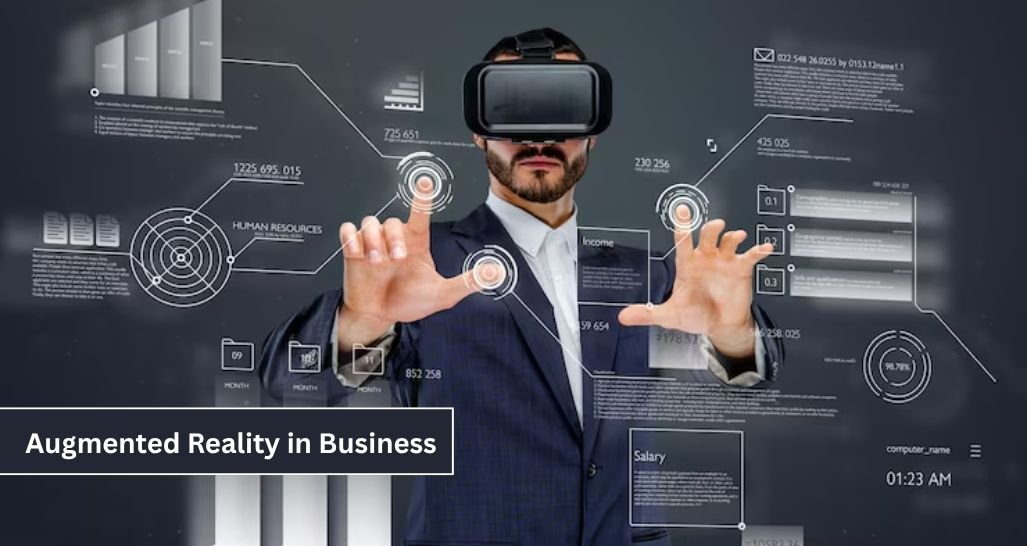
Augmented Reality (AR) is quickly becoming a strong tool that is changing how companies work, how they connect with customers, and how they get work done. When you add digital data, sounds, or pictures to the real world, AR makes experiences that are more immersive and interactive than usual ones. AR is being used by businesses increasingly to stay ahead of the competition, get customers more involved, and make their own processes run more smoothly.
Understanding Augmented Reality in Business
In business, augmented reality means using AR technology in several areas of the organization, such as marketing, sales, training, and operations. AR adds digital things to the existing world, while VR makes a whole new universe that is not real. This makes content more useful and easier to get to, especially because so many people use smartphones, tablets, and AR-enabled gadgets.
Companies in several fields, such as retail, real estate, healthcare, manufacturing, and education, are using AR to make things more efficient and give customers new experiences. AR is a flexible and scalable technology that organisations may use to make solutions that fit their needs.
Enhancing Customer Experience
One of the biggest effects of AR on business is how it affects the customer experience. People nowadays want interactions that are unique and interesting, and AR gives them just that. For example, stores use AR to let customers “try before they buy.” People may see how a piece of furniture will look in their home or how clothes and accessories will fit them using their phones.
This not only makes customers feel better, but it also cuts down on returns, which are a big issue in online shopping. AR makes shopping in person and online more like shopping online, which makes it more fun and engaging.
Revolutionizing Marketing and Advertising
AR has turned old-school marketing methods into campaigns that people can really get into. Companies may make ads that people can interact with that get their attention and stick in their minds. For example, commercials that use augmented reality (AR) let people scan a product or a code and see 3D models, animations, or promotional content right away.
This kind of marketing gets people interested and makes them want to take part. It also gives firms useful information on how customers act, which helps them improve their marketing plans. AR campaigns work best for younger people who are more tech-savvy and open to new experiences.
Improving Employee Training and Development
Training workers can take a lot of time and money, especially in fields that need people to have hands-on experience. AR makes this easier by offering realistic and interactive training simulations. Step-by-step visual instructions over real-world situations can help employees learn how to do complicated tasks.
For instance, in manufacturing, workers can utilise AR to learn how machines work without making mistakes. Medical workers can use AR simulations to practise operations in healthcare. This not only makes learning better, but it also cuts down on training expenditures and makes the whole process more efficient.
Boosting Productivity in Operations
AR is quite important for making operations run more smoothly. In logistics and warehousing, AR can show workers how to choose and pack things by giving them real-time directions and information. This cuts down on mistakes and speeds things up.
In the same way, AR gives technicians immediate access to information, schematics, and instructions when they are doing maintenance and repairs. With AR overlays, workers do not have to look at instructions to see what needs to be done. This means that problems can be solved sooner and downtime is less.
AR is also having a big effect on product creation. Before making something, designers and engineers can use AR to see how prototypes would look in real life. This helps find any problems early in the development process, which saves time and money.
AR in Real Estate and Architecture
AR technology has been quite helpful for the real estate business. People who want to buy a home can take virtual tours of it without being there. AR lets users look at floor plans, picture how the inside will look, and even make changes.
For architects and builders, AR makes it easy to see how a project will look when it is done. This makes it easier to plan, design, and share ideas with clients.
Challenges of Implementing AR in Business
There are several problems that arise with using AR in business, even though it has many benefits. The expense of development and integration is one of the biggest problems. To make high-quality AR experiences, you need to spend money on technology and hire experts.
Another problem is that the gadgets need to work together. Smartphones can use AR, but certain advanced apps may need dedicated hardware. Businesses also need to make sure that AR solutions are easy to use and available to a lot of people.
Also, it is essential to give some thought to the privacy and safety of the data. Since augmented reality apps collect and use user data, businesses have a responsibility to take measures to safeguard sensitive information and adhere to the rules.
The Future of Augmented Reality in Business
The future of AR in business looks good since technology is getting better. As 5G networks grow and devices get more capable, AR experiences will get faster, smoother, and more lifelike. This will provide firms fresh chances to come up with new ideas and develop.
The combination of augmented reality and artificial intelligence will make it even more impressive. AR driven by AI may provide you with more intelligent information, suggestions that are suited to your needs, and simpler ways to interact. For instance, augmented reality apps might analyse the preferences of clients and immediately provide them with tailored recommendations.
Smart glasses and other wearable AR products are also likely to become more popular. With these gadgets, AR will be easier to use and more seamless. Users will be able to engage with digital information without having to use portable devices.
Conclusion
Augmented Reality is no longer just a sci-fi idea; it is a useful and powerful technology that is changing the way businesses work. AR has many benefits that help businesses expand and come up with new ideas. These benefits include making customers happier, strengthening marketing techniques, streamlining processes, and training. Augmented reality will become increasingly significant in defining the future of business as it continues to improve. This will result in interactions that are more immersive, efficient, and interesting than they were in the past.